
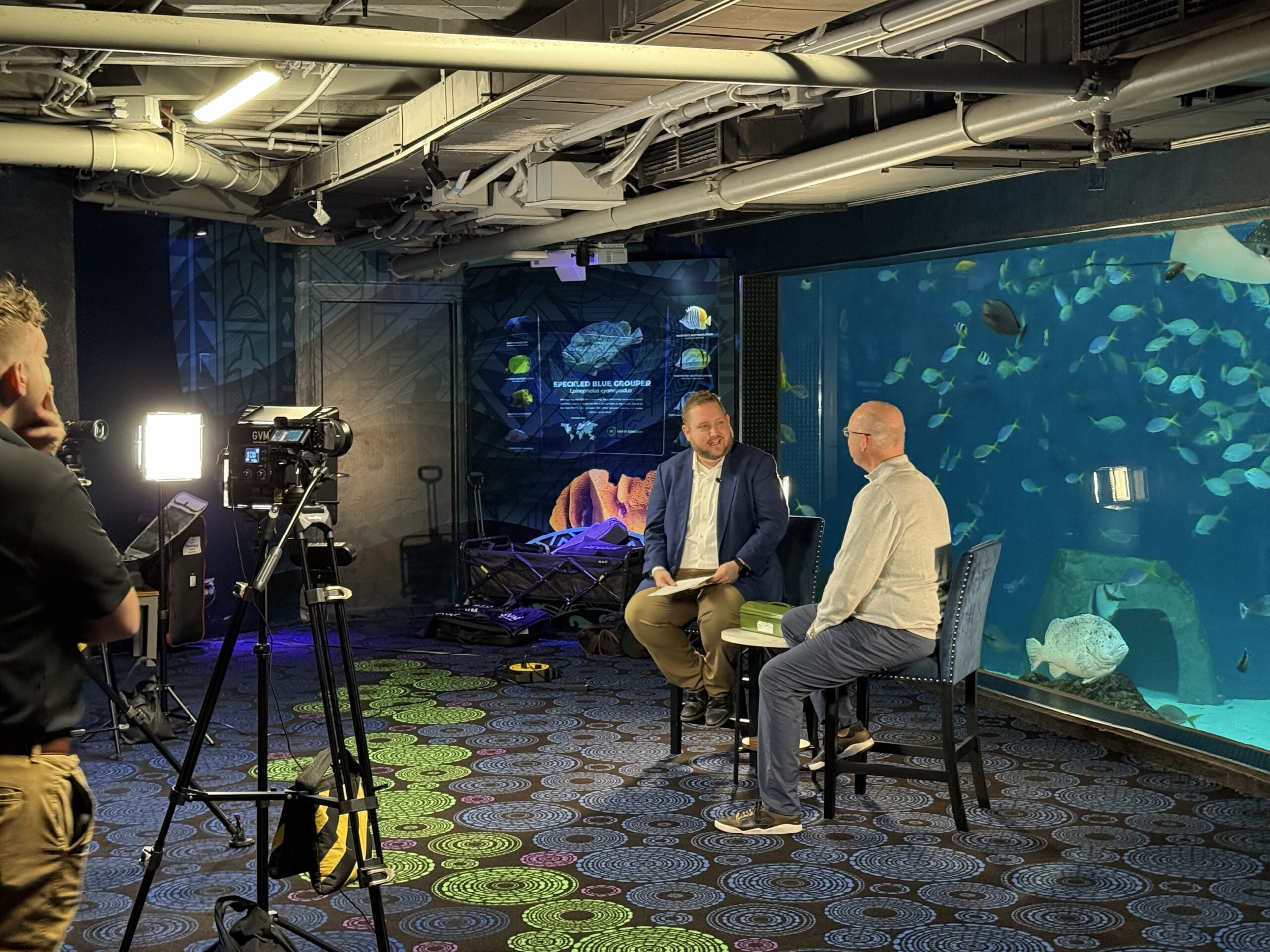
The best story your company has is the one nobody inside it thinks is interesting.
Ask a founder why they started and you get the polished thirty-second version, the one they have said four hundred times at networking breakfasts.
Ask the third question and something real shows up. A bad year. A customer who should have walked and didn’t. The reason they are still doing this at fifty-two.
That’s the one that sells. It just never makes it on camera.
Everybody liked the video. Nobody can repeat what you do.
You spent real money on it. People commented. Somebody said it was funny. Your mom shared it twice.
Then six weeks later you run into a perfect-fit prospect at a chamber event, and she lights up, because she saw the whole thing. She remembers the dog that wandered into frame. She cannot tell you what it is you actually do.
That is not a production problem. That is a story problem.
Most company videos are a list of services, read out loud by somebody in a quarter-zip. Nobody has ever hired anybody because of a list.
Why the real story never makes it on camera
It is just Tuesday to you.
The thing that would make a stranger trust you is the thing you stopped noticing in 2019. You lived it, so it does not feel like a story. It feels like what happened.
Nobody wants to tell the boss to stop talking.
The person with the most authority in the building is rarely the most believable one on camera, and there is nobody on the payroll whose job it is to say that out loud. So the CEO does the video, every time, and every ounce of the personality that makes people want to work with this company is…
Gone.
The interesting part sounds like a weakness.
The near miss. The refund you did not legally owe and wrote anyway. The job that went sideways and what you did at eleven at night to fix it. That is the part people believe, and it is the first thing that gets cut in the approval round, because somebody in the room says it makes us look bad.
It does not make you look bad. It makes you look real, which is the only thing your competitor cannot copy by Friday.
How we get it out of you
Four steps, and only one of them involves a camera.
- We interview past the third answer.The first answer is the elevator pitch, the second is the version from the website, and the third is usually where somebody stops performing and starts remembering. We sit there until we get it, with your founder, your longest-tenured employee, and at least one customer.
- We build the spine before anybody turns on a light.One sentence on what you do, one reason a skeptic should believe it, one person it is for. Everything after this gets measured against those three things, and anything that does not serve them gets cut, however good it looks.
- We cast for belief, not for rank.Sometimes that is the founder. Often it is the operations manager who has been there nineteen years and cannot talk about the work without her hands moving. We will tell you which, and we will be right, and you are allowed to be annoyed about it.
- We build it once and cut it for every room.The same story runs on your site, in a sales call, in a recruiting conversation and inside the proposal. One narrative, different lengths. That is what makes it compound instead of expire.
We are not here for the one video. A single video is a deliverable. What you are buying is a story that keeps working after the crew packs up.
What you actually get out of it
- Buyers who arrive already knowing what you do, so the first meeting starts at the second question instead of the first.
- A sales team telling the same story you tell, in the same words, without a script in front of them.
- Hiring conversations that stop being a salary negotiation, because a candidate can tell what they would be joining.
- A story that still holds up in five years, because it is true rather than tuned to whatever the platform is rewarding this month.
Companies with a real story and nobody whose job it is to tell it.
Mostly businesses between two and ten million in revenue, and nonprofits. You have a budget and you have staff, but you do not have a brand team, and the person who would have to do this is already doing three other jobs. Nonprofits get treated as peers here, not as a charity footnote. Same strategic problem, tighter money, a board instead of a boss.
Strategy is the product. These are the instruments.
Most clients start with one of these and end up using two or three, because the pieces are built to reinforce each other rather than run separately.
What do you want somebody to be able to say about you when you are not in the room?
We will ask what you want to be known for, who you want to be known by, and what has to be true five years from now. If we are not the right firm for that, we will tell you.
A media strategy and corporate storytelling firm in Tampa, Florida.
- (813) 568-9817
- 412 E Madison St., Suite 1209
Tampa, FL 33602 - Book a discovery call